
For authorized motorcycle dealerships running online stores, parts sales are a double-edged sword. On one hand, the volume of shoppers looking for precise components is massive. On the other hand, the return rates for original equipment manufacturer (OEM) parts are notoriously high, representing a major logistical burden.
Unlike regular apparel e-commerce where returns are standard, returning a KTM stator coil or a Husqvarna camshaft is a logistical nightmare. Parts get scratched, gaskets get ripped out of packaging, and mechanics plug in electrical components only to discover they ordered the wrong year. The dealer is stuck with non-resellable inventory, shipping deficit, and lost support hours.
The Silent Cost of Incorrect Fits
Industry audits suggest that processing returns costs dealerships significant administrative labor, inspection, re-shelving, and freight loss—before accounting for the depreciated value of opened goods.
Why Do Customers Order the Wrong Parts?
The root cause is rarely the customer's negligence. It is catalog layout complexity. A rider searching for a replacement cylinder head for a KTM 300 EXC is met with a maze of microfiche pages, similar-looking structural diagrams, and part numbers that supersede each other across model years.
Without explicit verification directly on the product detail page (PDP), the purchase is essentially a guess. Standard e-commerce grids cannot express the multi-dimensional mapping required for motorsport components.
The Solution: SKU-Based Compatibility Widgets
Integrating a dedicated parts finder widget shopify template onto your storefront changes the customer journey from speculation to verification. A fitment widget sits directly underneath the product description, taking the current item's SKU and cross-references it against a dynamic motorsport database.
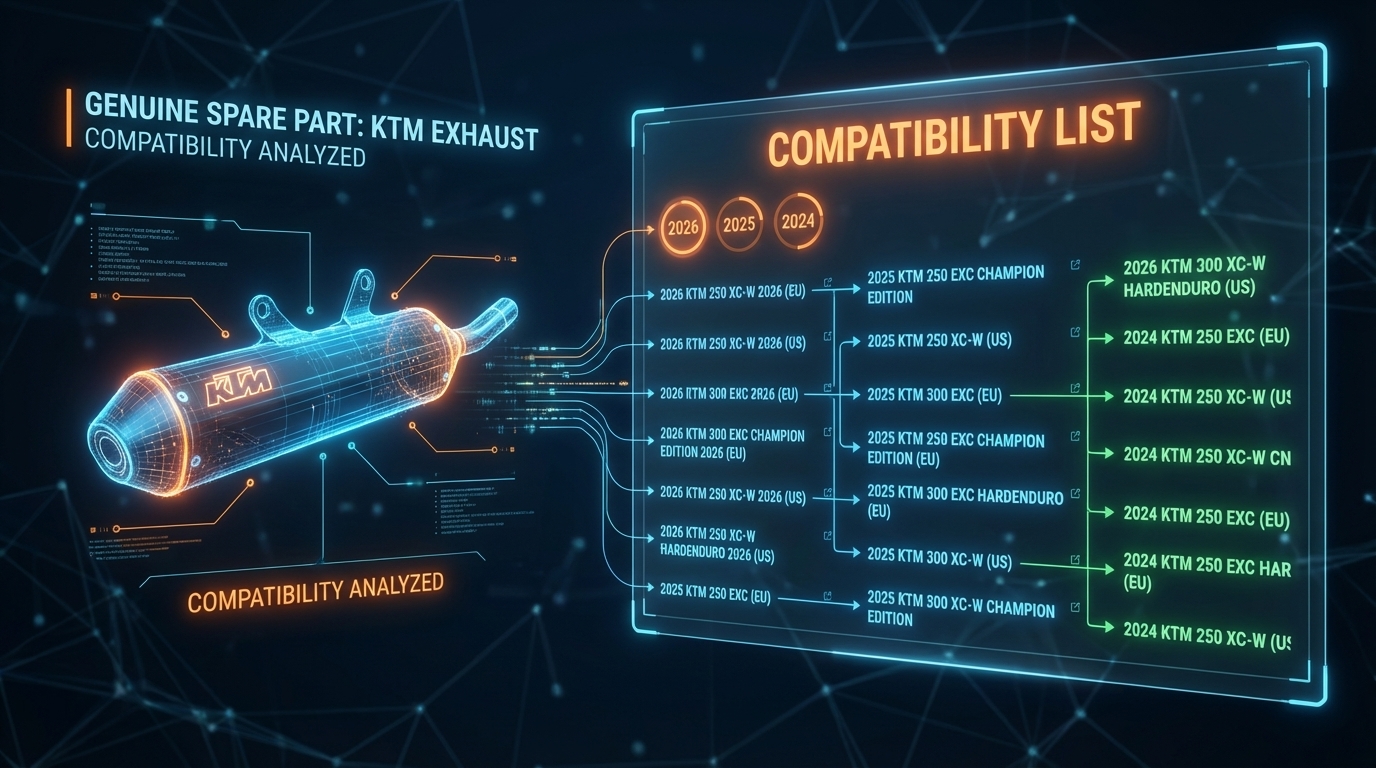
1. Live Compatibility Indicators
When a rider lands on a product page, the compatibility widget immediately queries your database to present an easy-to-read list of matches. Instead of cross-checking PDF spreadsheets, the rider sees a green badge: Fits your 2024 KTM 350 EXC-F.
2. Interactive Model Fitment Matrix
If the customer is browsing aftermarket alternatives or generic OEM upgrades, a collapsible accordion reveals a full fitment database breakdown:
| Brand | Model Year | Displacement | Fitment Type |
|---|---|---|---|
| KTM | 2020 - 2024 | 300 cc | Direct OEM Replacement |
| Husqvarna | 2021 - 2024 | 300 cc | Direct OEM Replacement |
| GasGas | 2022 - 2024 | 300 cc | Direct OEM Replacement |
How Widgets Drive a Return Reduction
By implementing SKU-based fitment checking, dealerships experience three key behavioral shifts:
- Elimination of 'Double-Ordering': Customers unsure of compatibility often order two different part variants to try both, intending to return the incorrect one. Clear fitment validation halts this practice entirely.
- Fewer Pre-Sale Support Bottlenecks: Instead of clogging your chat widget or telephone lines with fitment questions, buyers read verified fitment lists, speeding up checkouts.
- Automatic Database Syncing: Incompatible orders are immediately flagged. If a user sets their bike profile to a GasGas, but attempts to checkout with a KTM-specific chassis bolt, the cart can trigger a warning, saving a logistics mistake.
Getting Started on Shopify
Adding a robust parts finder widget shopify requires no custom theme architecture or manual database mapping. Parts Finder Software connects directly to your existing catalog, mapping provider database matrices dynamically to keep your fitment tables continuously aligned.
If you want to protect your dealership's profit margins, own your customer data, and deliver a frictionless buying experience for riders, it's time to retire static charts.